
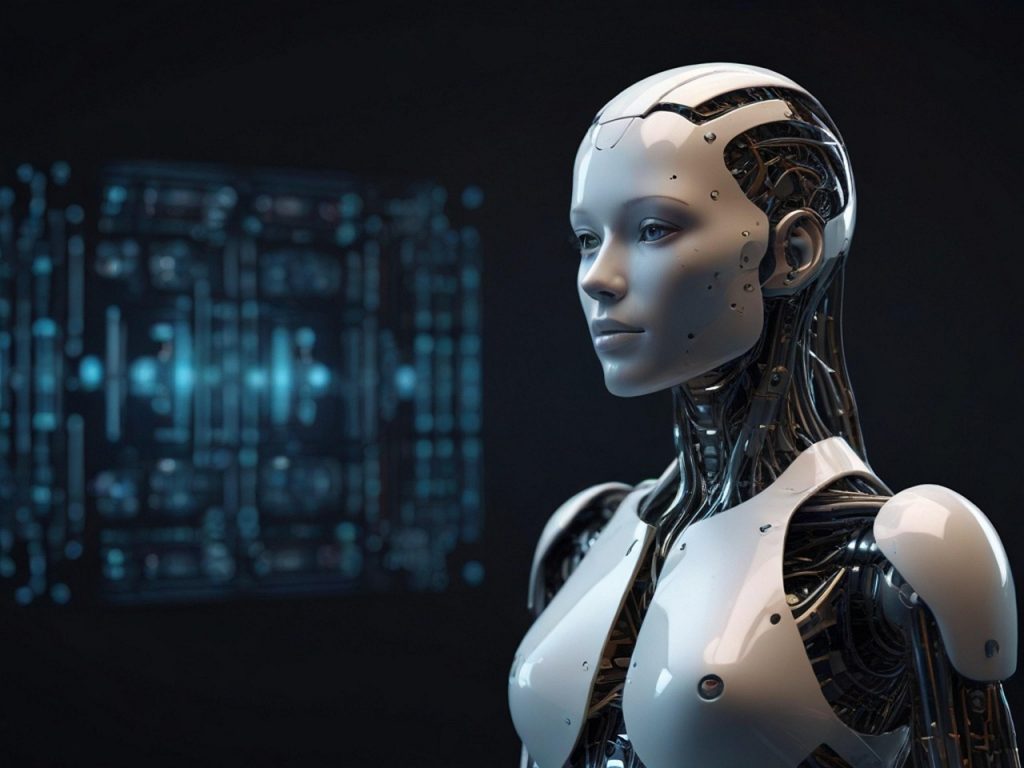
Robotics is no longer stuck making single-purpose machines. Thanks to newer AI training methods, the industry is finally moving closer to robots that can adapt, understand instructions, and work in the real world.
机器人行业不再局限于研发单一功能设备。依托新一代人工智能训练技术,行业终于逐步造出能够自主适应环境、理解指令,并在真实场景中作业的机器人。
For the socially minded, such a machine could help those with mobility issues, ease loneliness, or do work too dangerous for humans. For the more financially inclined, it would mean a bottomless source of wage-free labor. Either way, a long history of failure left most of Silicon Valley hesitant to bet on helpful robots.
从社会价值来看,这类机器人可以协助行动不便人群、慰藉独居者,或是承担人类难以胜任的高危工作。从商业角度而言,它们意味着源源不断的零人力成本劳动力。但受过往数十年技术失败的影响,硅谷多数企业此前一直不愿押注实用型机器人赛道。
That has changed. The machines are yet unbuilt, but the money is flowing: Companies and investors put $6.1 billion into humanoid robots in 2025 alone, four times what was invested in 2024.
如今局面已然改变。尽管成熟产品尚未全面落地,但资本已大量涌入:仅 2025 年,企业与投资方就在人形机器人领域投入61 亿美元,金额是 2024 年的四倍。
What happened? A revolution in how machines have learned to interact with the world.
变化从何而来?根源在于机器感知、适应现实世界的学习方式迎来了一场变革。
Imagine you’d like a pair of robot arms installed in your home purely to do one thing: fold clothes. How would it learn to do that?
试想一下,你在家中安装一组机械臂,只为完成叠衣服这一项工作。机器人要如何学会这项任务?
You could start by writing rules. Check the fabric to figure out how much deformation it can take. Find the edges of the shirt. Pull them straight. Fold one side to the middle. Fold the other side. Roll it up.
过去的做法是编写一条条运行规则:检测面料、判断承力限度、找到衣摆、将衣物拉平、一侧向中间折叠、再折叠另一侧,最后整理成型。
This is how robots have been taught for decades: line by line, rule by rule, exception by exception. It works in tightly controlled environments like car assembly lines, where every bolt is in the same place every time. But it falls apart in a home, where shirts come in different sizes, materials, and crumpled states.
数十年来,机器人一直依靠这种逐行编码、逐条设规、逐个补充特殊情况的方式运行。这套模式在汽车流水线这类环境恒定的场景中有效 —— 每一颗螺丝的位置都固定不变。但放到家庭环境中就会失灵,衣物尺寸、面料、褶皱状态全都各不相同。
“Rule-based systems are very brittle,” says Chelsea Finn, a robotics professor at Stanford. “If you deviate even a little bit from the exact scenario that the system was designed for, it fails.”
斯坦福大学机器人学教授切尔西・芬恩表示:“基于规则的系统容错性极差。只要实际场景和预设场景出现一丝偏差,机器人就会无法正常工作。”
So researchers began trying a different approach: imitation learning. Instead of coding rules, you show the robot what to do. A human picks up a shirt and folds it; the robot’s cameras and sensors record every movement. The robot then learns to copy the motions.
于是研究人员开始尝试新方案:模仿学习。不再编写规则,而是直接向机器人演示操作流程。人类拿起衣服进行折叠,机器人通过摄像头与传感器记录全部动作,随后模仿复刻。
This is better, but it’s still limited. The robot can only repeat what it’s seen. If you hand it a towel instead of a shirt, it will likely mess up.
这种方式有所进步,但依旧存在局限。机器人只能复刻见过的动作,如果把毛巾而非衣服交给它,作业就很容易出错。
The real breakthrough came with reinforcement learning, a method where robots learn by trial and error. The robot tries to fold a shirt, fails, and gets a negative “reward.” It tries again, adjusts its movements, and eventually figures out what works.
真正的突破来自强化学习,这是一种让机器人在不断试错中成长的方法。机器人尝试叠衣服,操作失误就会收到负面反馈;它不断重试、调整动作,最终摸索出正确的操作方式。
Reinforcement learning has been around for years, but it was too slow for real-world robots. Then, about five years ago, researchers started combining it with large language models (LLMs) and computer vision. The result: robots that can understand natural language, see the world, and learn new tasks in minutes or hours instead of days or weeks.
强化学习技术早已出现,但此前学习效率过低,无法应用在实景机器人上。大约五年前,研究人员将其与大语言模型、计算机视觉相结合。最终实现重大跨越:机器人能够理解自然语言、感知周遭环境,并且在数分钟至数小时内学会新任务,而非过去的数天乃至数周。
“LLMs give robots a kind of common sense,” says Andrej Karpathy, former Tesla AI chief and now a robotics investor. “They can understand abstract instructions like ‘fold the shirt neatly’ even if they’ve never heard that exact phrase before.”
特斯拉前人工智能负责人、现机器人领域投资人安德烈・卡帕西说道:“大语言模型赋予了机器人基础常识。即便从未听过‘把衣服叠整齐’这类表述,它们也能理解这类抽象指令。”
This new wave of AI-powered robots is already leaving the lab.
这一波由人工智能驱动的新型机器人,已经走出实验室,走向实际应用场景。
Agility Robotics’ Digit, a humanoid warehouse robot, is now working at Amazon and GXO Logistics facilities, moving boxes up to 16 kg. It’s one of the first humanoids that companies see as providing actual cost savings, not just a marketing gimmick.
敏捷机器人公司的人形仓储机器人 Digit,现已入驻亚马逊与 GXO 物流园区,可搬运最重 16 公斤的货箱。它也是首批真正为企业节约运营成本、而非仅用作营销噱头的人形机器人之一。
Tesla’s Optimus is being tested on Tesla’s factory floors, doing simple tasks like moving parts and inspecting vehicles. Figure AI’s Figure 03 is working in automotive factories, assembling door panels and dashboards.
特斯拉的 Optimus 机器人正在自家工厂开展测试,负责搬运零部件、车辆巡检等基础工作。Figure AI 公司的 Figure 03 则落地汽车工厂,参与车门、仪表盘的组装作业。
These robots are still far from perfect. They stumble over curbs, drop objects, and get confused by messy rooms. But they’re improving exponentially.
目前这类机器人仍有诸多不足:经过路沿时容易磕碰、偶尔掉落物品,面对杂乱环境也会手足无措。但它们的性能正以指数级速度迭代提升。
“Three years ago, if you asked me when we’d have a robot that could reliably fold laundry, I would have said 10 to 20 years,” says Finn. “Now I think it’s 3 to 5 years.”
芬恩表示:“三年前,若问我何时能出现稳定叠衣服的机器人,我会认为需要 10 到 20 年。而现在我判断,仅需 3 至 5 年就能实现。”
The age of humanoid robots isn’t here yet—but it’s very close. And when it arrives, it will change work, life, and society in ways we can barely imagine.
人形机器人时代尚未完全到来,但已经近在眼前。当这一时代真正降临,它将以我们难以想象的方式,彻底改变人类的工作、生活与整个社会。
暂无评论